

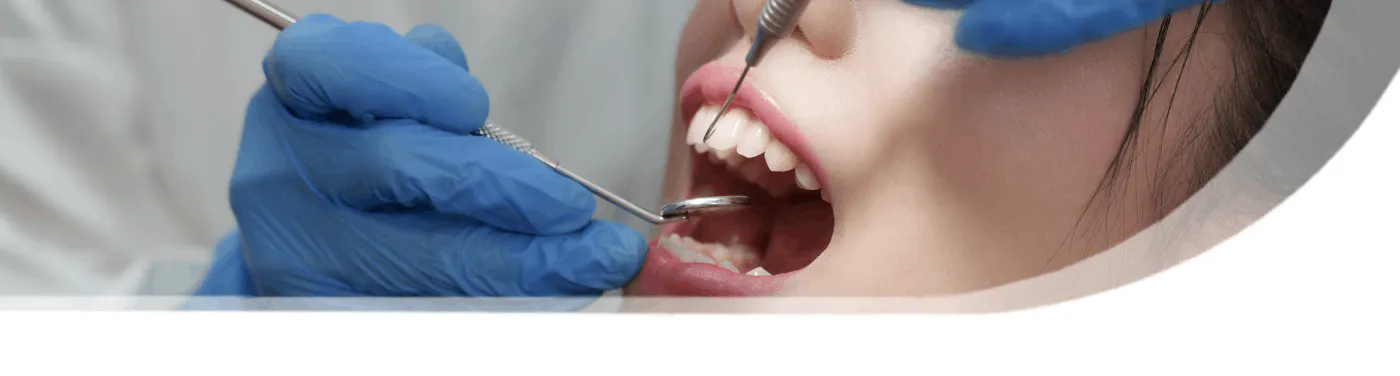
Scaling and root planing (SRP) is a type of deep cleaning that treats gum disease below the gumline.1 When gum pockets become too deep, SRP may be recommended.1 Learn more about scaling and root planing, from when it’s needed and what to expect to recovery.
Key Takeaways
- Scaling and root planing (SRP) is a deep-cleaning treatment used to address gum disease below the gumline.1
- SRP may be recommended when gum pockets become too deep for a standard professional cleaning to address.1
- After SRP, discomfort may last a day or two, while tooth sensitivity can continue for up to a week.1
- Some patients need no further treatment after SRP, while most will need continued periodontal maintenance.2
What Is Scaling and Root Planing?
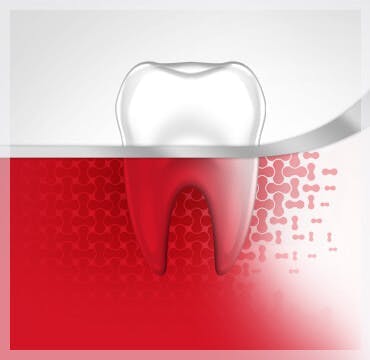
SRP treats gum disease by cleaning areas below the gumline and along the tooth roots.1,2 Plaque bacteria inflames the gums, causing them to pull away from the teeth and form pockets where more plaque can collect.1
Regular Cleaning vs. Deep Cleaning: What’s the Difference?
A regular professional cleaning may be enough when gum disease is caught early, before it has affected structures below the gumline.1 When gum pockets become too deep, however, scaling and root planing (SRP) may be needed.1 The table below compares when each type of cleaning may be used and highlights the treatment details that make SRP different.
Table 1. Regular professional cleaning vs. deep cleaning
Regular professional cleaning |
Deep cleaning (scaling and root planing) |
|
When it may be appropriate |
May be enough when gum disease is found early and structures below the gumline have not been damaged.1 |
May be needed when the pockets between the gums and teeth become too deep.1 |
How far the cleaning reaches |
Used at an earlier stage, before gum disease has damaged structures below the gumline.1 |
Scaling reaches above and below the gumline, including down to the bottom of periodontal pockets.1 |
SRP-specific treatment step |
— |
Root planing smooths the tooth roots to help the gums reattach and can reduce future plaque or toxin adherence.1,2 |
Treatment course |
— |
SRP may take more than one visit and may require a local anesthetic.1 |
What Are Signs You May Need Scaling and Root Planing?
These symptoms can be signs of gum disease; SRP may be needed when gum pockets become too deep.1,3
- Gums that look red or swollen, or feel tender.3
- Gums that bleed easily or often.3
- Gums pulling away from the teeth so the teeth look longer.3
- Teeth that feel loose or unusually sensitive.3
- Pain or discomfort while chewing.3
- Bad breath that does not go away.3
What Happens During Scaling and Root Planing?
SRP includes two main treatment steps, and it can require more than one appointment.1
- Scaling: The dentist clears plaque and hardened tartar from above and below the gumline, reaching to the base of the gum pocket.1 A local anesthetic may be used.1
- Root planing: The tooth roots are then smoothed to support the gums reattaching to the teeth.1
- Additional visits: The full treatment may take more than one visit.1
- Follow-Up: Once SRP is complete, your dentist schedules a follow-up to check how the gums are healing and measure pocket depth.1
Is Scaling and Root Planing Effective?
Yes. For many patients, scaling and root planing is effective on its own, and many don't need any further treatment afterward.² SRP works by removing plaque and tartar from the pockets between the gums and teeth. It then smooths the tooth roots, which helps the gums reattach and makes it harder for plaque to build up again.¹˒² This is why the ADA calls SRP without adjunctive therapy the treatment of choice for periodontitis.⁶
Keeping those results takes ongoing care. Your dentist will schedule a follow-up visit to check how your gums have healed and measure your pocket depths.¹ Most patients will also need ongoing periodontal maintenance.² Brushing twice a day, cleaning between your teeth daily and seeing your dentist regularly help keep gum disease from getting worse or coming back.¹
What Should You Expect After SRP, and How Do You Care for Your Gums?
Pain can continue for a day or two after a deep cleaning, and tooth sensitivity may last for as long as a week.1 The gums may also be swollen, tender, or prone to bleeding during recovery.1
Consistent home gum care can help keep gum disease from worsening or returning:1
- Use a soft toothbrush twice a day.1
- Clean between your teeth every day.1
- Follow a balanced diet.1
- Avoid tobacco use.1
- Continue regular dental visits.1
Your dentist may prescribe a pill or mouth rinse to help prevent infection, manage pain, or support healing.1
How Can You Help Keep Your Gums Healthy for the Long Term?
Regular at-home dental care can help reduce the chance that gum disease becomes more serious or comes back.1
The ADA Seal listing for parodontax Daily Fluoride Anticavity and Antigingivitis Toothpaste notes that the product can help prevent tooth decay, gingivitis, and plaque above the gumline when used as directed.4
Frequently Asked Questions
What is scaling and root planing?
Scaling and root planing {SRP} is a deep-cleaning procedure that works below the gumline to treat gum disease.1
Does scaling and root planing hurt?
A local anesthetic may be used during SRP.1 After treatment, pain may last a day or two and tooth sensitivity may continue for up to a week.1
How do I care for my gums after scaling and root planing?
Use a soft brush twice a day, clean between your teeth daily, eat a balanced diet, avoid tobacco, and keep up with regular dental visits.1
How long is recovery from scaling and root planing?
Pain may continue for a day or two after deep cleaning, while tooth sensitivity can last up to a week.1
The gums may also feel tender, look swollen, or bleed.1
Is scaling and root planing worth it?
If your dentist recommends it, yes. Once gum disease forms deep pockets between your gums and teeth, plaque gets trapped there and regular brushing can't remove it.¹ Left untreated, gum disease can lead to bone and tooth loss.¹ In the worst cases, teeth may become loose or need to be removed.³ SRP cleans out those pockets and smooths the tooth roots to help your gums reattach to your teeth.¹ Many patients don't need any more treatment afterward.²
SOURCES
1. Scaling and Root Planing. MouthHealthy, American Dental Association. https://www.mouthhealthy.org/all-topics-a-z/scaling-and-root-planing. Accessed 8/13/2026.
2. Non-Surgical Treatments. American Academy of Periodontology. https://www.perio.org/for-patients/periodontal-treatments-and-procedures/non-surgical-treatments/. Accessed 8/13/2026.
3. Periodontal (Gum) Disease. National Institute of Dental and Craniofacial Research (NIH). https://www.nidcr.nih.gov/health-info/gum-disease. Accessed 8/13/2026.
4. parodontax Daily Fluoride Anticavity and Antigingivitis Toothpaste. ADA Seal of Acceptance product listing, American Dental Association. https://www.ada.org/resources/research/science/ada-seal-of-acceptance/product-search/a065e000007A385AAC/parodontax-daily-fluoride-anticavity-and-antigingivitis-toothpaste. Accessed 8/13/2026.
5. Periodontal Disease in Adults (Age 30 or Older). NIDCR Data & Statistics (NIH), NHANES 2009–2014. https://www.nidcr.nih.gov/research/data-statistics/periodontal-disease/adults. Accessed 8/13/2026.
6. Periodontitis. American Dental Association. https://www.ada.org/resources/ada-library/oral-health-topics/periodontitis. Accessed 8/13/2026.


Recommended Articles

Are Your Gums Healthy?
What Causes Inflamed Gums?